
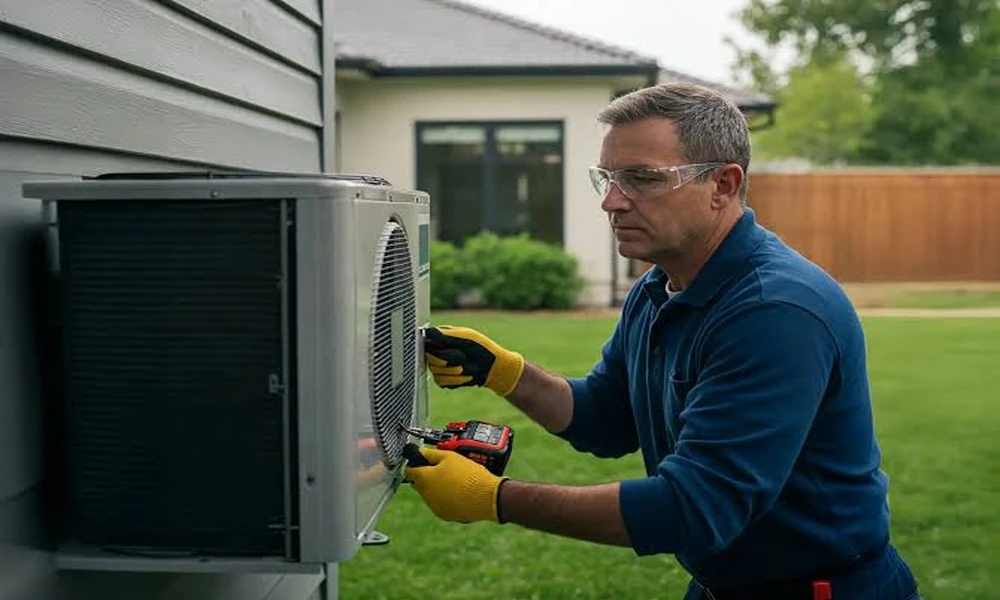

Putting in a new central air conditioner in Roseville is a different decision than it was two summers ago. California’s 2025 Energy Code has applied to permits since January 1, 2026. The refrigerant inside new equipment has changed. The city’s own electric utility also ties its rebates to a properly permitted job. Much of the advice homeowners hear from neighbors, older installers and online forums dates from when R-410A units were the default and a changeout meant a truck and a long afternoon. Some of that advice still holds, but a lot of it doesn’t, especially in a city where July afternoons regularly pass 100 degrees and the evening Delta breeze can drop temperatures by 30 or more.
A contractor who works inside these rules every week can tell you which advice still applies. All 1 Mechanical has handled Roseville ac installation since 2018 from its Melody Lane office. The owner brings more than 25 years in the trade, and the technicians complete a five year training and apprenticeship program. The team installs central split systems, heat pumps and ductless units across Placer and Sacramento counties, pulls the permits, and backs its work with a warranty and financing options. A free estimate is a practical way to find out which of the beliefs below apply to your house.
The Bigger Unit Belief
The most common assumption is that if the old system struggled through a heat wave, the new one needs more tonnage. In practice, a struggling system usually points to leaky ducts, a low refrigerant charge or a dirty coil. The house rarely needs more capacity. A proper replacement starts with a Manual J load calculation, which accounts for west facing glass, attic insulation depth, duct location and how many people live in the home.
The difference between an oversized unit and a right-sized one shows up in how each behaves through an afternoon. An oversized 4 ton condenser on a house that needs 3 tons cools the air near the thermostat quickly and shuts off. Back bedrooms stay warm because the air never fully mixes. A matched 3 ton runs longer, steadier cycles that even out temperatures from room to room and put less stress on the compressor from repeated starts.
Roseville’s climate gives right-sized equipment an advantage. The dry air and the big overnight cool down let a house shed heat after sunset, so a properly sized system catches up every evening.
Variable speed inverter compressors have become the strongest trend in residential cooling. They can throttle down to a fraction of their rated output, which makes sizing more forgiving. They don’t fix undersized ductwork, though. California expects new systems to move roughly 350 cubic feet of air per minute for every ton of cooling, and a larger unit pushed through the same narrow ducts falls short of that target quickly.
Why a Changeout Is Never Just a Swap
Another belief holds that replacing an outdoor unit is a simple exchange that doesn’t need paperwork. State law disagrees. An HVAC replacement in California needs a building permit, and an independent rater must verify the installation. Under the 2025 code those raters are now called ECC raters instead of HERS raters, and the California Energy Commission’s Energy Code Compliance program oversees them.
On a typical changeout, the rater tests the existing ducts for leakage. Ducts in Roseville homes often run through attics that hit 140 degrees or more in summer, so leaks there waste a lot of cooled air. Roseville also sits in the inland climate zones where the state requires verification of refrigerant charge or airflow, in addition to the duct test.
The two paths compare plainly. A permitted job brings a documented duct test, a rater’s sign off, eligibility for utility rebates and a clean record when you sell the house. An unpermitted job saves a modest fee and a few days. In exchange, it gives up the rebate and leaves a gap that can come up during a home inspection, and the state contractor licensing board has warned that insurers may treat unpermitted work as a problem. The permit inspector will also check for working smoke and carbon monoxide alarms, which the California Residential Code requires once permitted work passes a fairly low dollar threshold.
Leftover Refrigerant Stock and Its Real Cost
Some homeowners have heard that the refrigerant question is settled and that a discounted R-410A system is a bargain. The first part is partly true. In May 2026 the federal government finalized a rule that removed the January 1, 2026 installation deadline for R-410A equipment manufactured before 2025. The EPA’s technology transitions page tracks these changes. So legal leftover stock does exist.
The second part needs more thought. Equipment built since 2025 for the California market uses lower impact A2L refrigerants such as R-454B or R-32, because the state set its own 750 GWP limit for new air conditioning equipment. A discounted R-410A system costs less today. Over its life, though, it will depend on a refrigerant that California plans to stop selling in virgin form in 2030. Every future leak repair could cost noticeably more.
The two refrigerants also can’t be mixed. An A2L condenser can’t connect to an old R-410A evaporator coil, so a matched system almost always includes a new indoor coil. It often includes new or thoroughly flushed line sets as well. Many of the 1990s homes built in Roseville’s growth years, including large parts of Sun City, still run original or second generation R-22 equipment. For those homes, a full matched replacement is the only sensible route.
The Heat Pump Question Is Really About Cooling
The last belief is that heat pumps belong in cold climates, or that choosing one is purely a heating decision. A heat pump is an air conditioner with a reversing valve, and in summer it cools exactly like one. Roseville winters are mild, with only occasional frosty nights, which suits heat pump heating well.
The comparison comes down to fuel and equipment count. An air conditioner paired with a gas furnace means two fuels, two bills and two sets of combustion and cooling parts to maintain. A heat pump with an electric air handler means one fuel and one outdoor unit doing both jobs. Roseville Electric is city owned, and its residential rebate listings have generally favored multi-stage heat pumps over standalone air conditioners. A City of Roseville building permit is part of the application. Amounts change, so confirm the current figures before you sign a contract. If your home has an older 100 amp electrical panel, check its capacity early in planning.
Taken together, a good installation in this city in 2026 starts with a load calculation instead of a guess. It includes a permit and an independent test, a refrigerant choice made with the next 15 years in mind, and an honest look at whether the same outdoor unit should also replace the furnace. Advice that skips any of those steps was likely formed before the rules changed.
Which AC Install Advice Still Holds Up in Placer County?