
Medium-voltage equipment specifications often use the terms metal-clad and metal-enclosed, and it is easy to assume they mean nearly the same thing. Both describe switchgear housed in grounded metal enclosures. The differences lie in how the equipment is built, what switching devices it uses, and how it can be maintained, and those differences affect cost, safety, and suitability for a given project.
Engineers typically choose metal clad switchgear when reliability and maintainability are top priorities, while metal-enclosed designs often serve simpler or more cost-sensitive applications. Knowing how to tell them apart helps owners read specifications and ask the right questions. Here is a practical comparison.
What Metal Clad Means
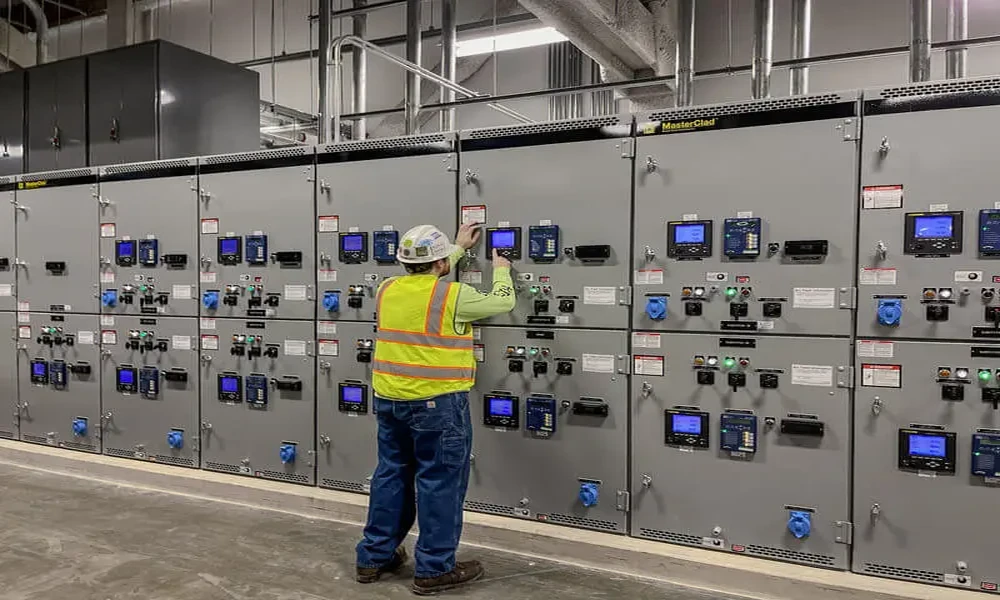
Metal-clad switchgear follows a defined set of construction rules.
- Draw-out circuit breakers: Breakers can be withdrawn from their cells for testing and maintenance.
- Full compartmentalization: Grounded metal barriers separate breaker, bus, and cable areas.
- Insulated primary bus: Bus conductors are covered with insulating material.
- Automatic shutters: Close over live connections when a breaker is removed.
What Metal Enclosed Means
Metal-enclosed switchgear is a broader category. The equipment is fully enclosed in metal, but it does not need to meet every metal-clad construction requirement.
- Switching devices: Often uses load interrupter switches and power fuses rather than draw-out breakers.
- Fixed mounting: Devices are usually fixed in place rather than withdrawable.
- Fewer internal barriers: Compartmentalization may be more limited.
- Bus insulation: Bare bus may be used in some designs.
Key Differences Side by Side
- Protection devices: Metal-clad uses circuit breakers with protective relays, while metal-enclosed often relies on fuses or switches.
- Maintenance: Draw-out breakers allow servicing one circuit while others remain energized.
- Fault containment: Barriers in metal-clad designs help limit a fault to one compartment.
- Footprint and cost: Metal-enclosed designs are often more compact and less expensive.
- Restoration after a fault: Breakers can be reset, while blown fuses must be replaced.
Where Each Type Fits Best
- Metal-clad: Large industrial plants, hospitals, data centers, utility substations, and other facilities where downtime is costly.
- Metal-enclosed: Commercial buildings, smaller campuses, transformer primary protection, and sectionalizing applications where simplicity and cost matter more.
How to Identify the Type on Site
- Check the equipment nameplate and drawings for the stated construction type and standard.
- Look for racking mechanisms that indicate draw-out breakers.
- Note whether fuses and load interrupter switches are the main devices.
- Review the original specification or submittal documents.
Only qualified personnel should open or inspect medium-voltage equipment, and visual checks should never replace documentation and proper safety procedures.
Standards Behind the Terms
Both categories are defined in IEEE C37 standards and related ANSI standards, which set construction and testing requirements. Specifying the correct standard in project documents avoids confusion between bidders and ensures equipment meets the intended performance level.
Questions to Ask When Choosing
- How critical is continuous operation for the loads served?
- Will maintenance need to happen without a full shutdown?
- What fault current levels must the equipment handle?
- How much space and budget are available?
Clarity That Leads to Better Specifications
Metal-clad and metal-enclosed switchgear each serve important roles in medium-voltage systems. Understanding their differences helps project teams match equipment to the facility’s reliability needs, budget, and maintenance approach, resulting in a safer and better-planned electrical system.