
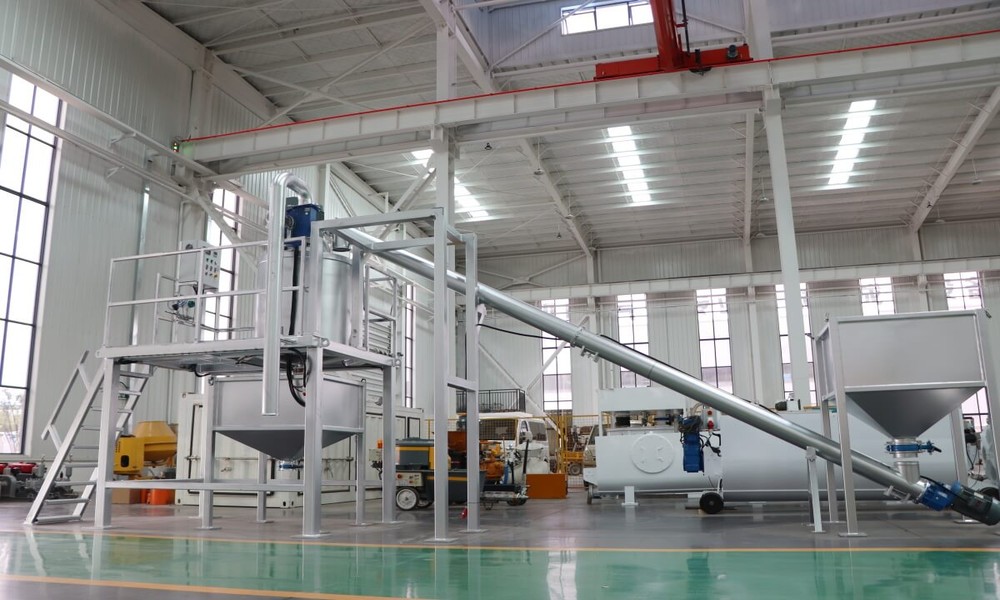

In modern construction, the quality of ground stabilization determines the success and longevity of a project. Whether it’s infrastructure development, tunneling, mining, or foundation work, unstable soil conditions can lead to structural failure, delays, and increased costs. To overcome these challenges, engineers increasingly rely on bentonite cement grout combined with advanced mixing technology.
This powerful combination delivers improved soil strength, better control during application, and enhanced efficiency on site. Understanding how it works can help construction professionals achieve consistent, high-quality results.
What Is Bentonite Cement Grout?
Bentonite cement grout is a specialized mixture made from cement, bentonite clay, and water. Bentonite is known for its ability to absorb water and swell, giving the grout unique properties such as thixotropy-where the material flows under movement and stabilizes when at rest.
The cement component provides strength and durability, while bentonite enhances flowability and stability. Together, they create a versatile material ideal for ground improvement and sealing applications.
Why Ground Stabilization Is Essential
Ground stabilization is critical for ensuring that soil can support structural loads and resist environmental factors. Without proper stabilization, projects may face issues such as settlement, cracking, or even collapse.
Effective stabilization provides:
Increased load-bearing capacity
Reduced settlement and deformation
Improved resistance to water infiltration
Enhanced long-term durability
Bentonite cement grout plays a key role in achieving these outcomes, especially in challenging soil conditions.
How Bentonite Cement Grout Works
The grout is typically injected into the ground using pumps or drilling equipment. As it flows, it fills voids, binds soil particles, and displaces water.
The bentonite ensures smooth flow and stability during placement, while the cement hardens over time to form a strong, cohesive mass. This process improves soil structure and reduces permeability, making it suitable for a wide range of applications.
The Role of Advanced Mixing Technology
The effectiveness of bentonite cement grout depends heavily on the quality of mixing. Traditional mixing methods can result in uneven distribution of materials, leading to inconsistent performance.
Advanced mixing technologies, such as high-shear and colloidal mixers, ensure:
Uniform particle dispersion
Consistent grout quality
Improved flow characteristics
Reduced segregation and bleeding
These technologies enhance the performance of the grout and ensure reliable results across different applications.
Key Benefits of Using Bentonite Cement Grout
Superior Stability
The combination of bentonite and cement improves soil strength and minimizes movement.
Enhanced Flowability
The thixotropic nature allows the grout to penetrate complex voids and fractures.
Water Control
The grout reduces permeability, helping to control groundwater flow and prevent seepage.
Cost Efficiency
Efficient mixing and application reduce material waste and labor costs.
Environmental Benefits
Minimizing excavation and optimizing material usage contribute to more sustainable construction practices.
Applications in Construction and Mining
Bentonite cement grout is widely used in various sectors.
Foundation stabilization and underpinning
Tunnel and shaft construction
Dam sealing and cutoff walls
Groundwater control systems
Soil improvement in mining operations
Its versatility makes it an essential material for modern construction challenges.
Best Practices for Successful Application
Use project-specific mix designs based on soil conditions.
Employ advanced mixing equipment to ensure consistency.
Monitor injection pressure and flow during application.
Train operators for efficient equipment handling.
Perform regular quality checks to ensure performance standards.
Common Challenges and How to Overcome Them
Inconsistent mixing can lead to weak zones-use high-quality mixing equipment to ensure uniformity.
Excess water can reduce strength-maintain proper mix ratios.
Blockages during pumping-optimize mix design for better flow.
Environmental conditions affecting curing-plan and monitor accordingly.
Conclusion
Mastering ground stabilization requires the right combination of materials and technology. Bentonite cement grout, when paired with advanced mixing systems, offers a reliable and efficient solution for improving soil conditions and ensuring structural integrity.
By adopting these modern techniques, construction professionals can enhance project performance, reduce costs, and achieve long-lasting results. As the industry continues to evolve, embracing advanced materials and technologies will be key to building safer and more sustainable infrastructure.